
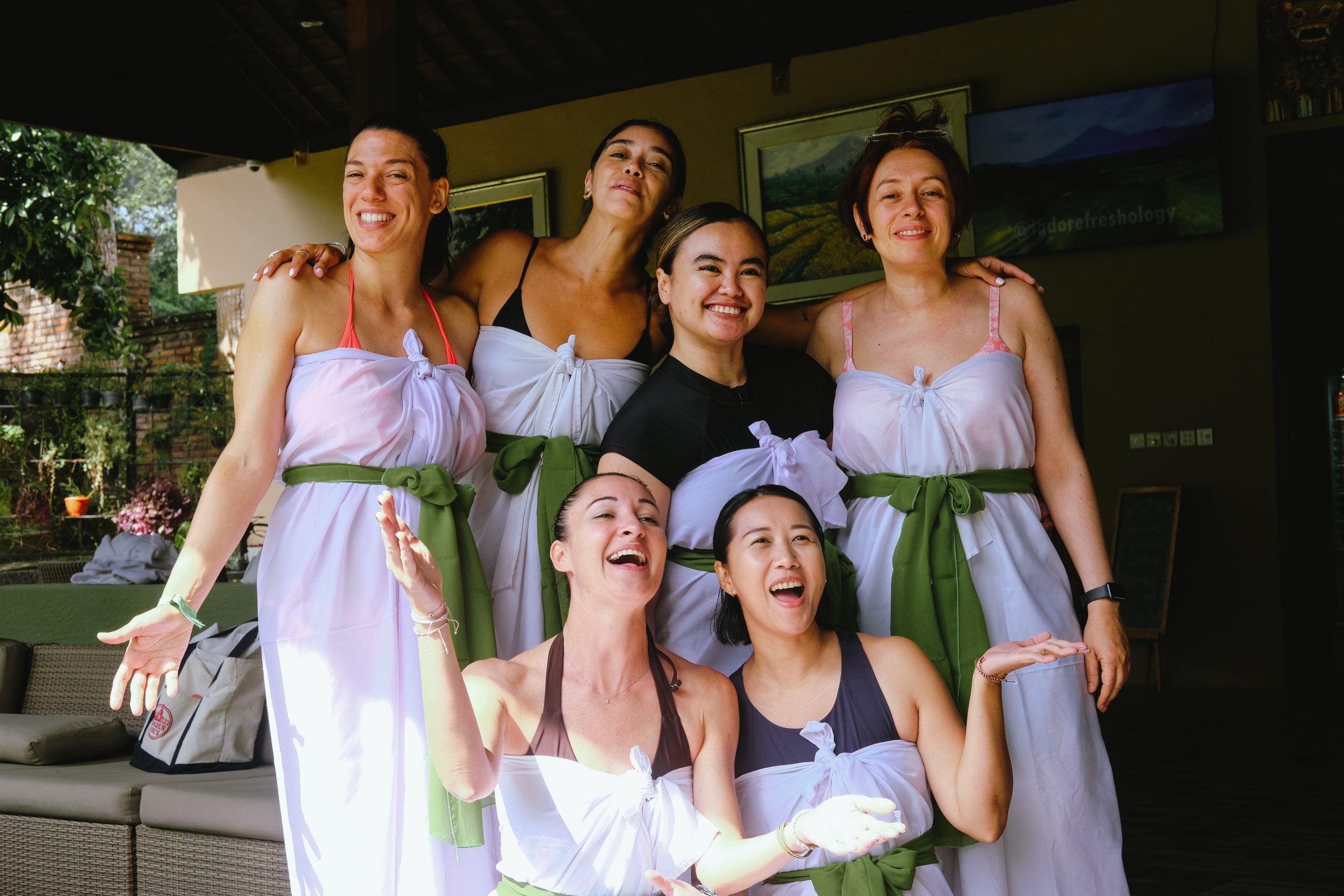
The question people rarely ask before booking a digital detox retreat is the practical one: what do I do with the time?
It sounds almost embarrassing. But for people who have spent years filling every available moment with a screen — work, social media, streaming, scrolling — the prospect of three days with no phone is not just about missing notifications. It is about genuinely not knowing what to do with their hands when the device is not in them.
Here is what that time actually looks like at Bali Palms. Concretely, practically, hour by hour.
Morning — The Hours That Change First
The earliest shift most guests notice is in the morning. When there is no phone to reach for, the first hour of the day becomes available in a way that it hasn’t been in years.
At Bali Palms, the morning sequence tends to settle into something like this: wake before 6am (the birds make this natural), step onto the cabin terrace with a coffee or tea that has been left in the minibar, sit in the garden for twenty to thirty minutes watching the jungle come to life. Then walk to the yoga deck for the sunrise session at 6:30.
The sunrise yoga session — one hour of gentle movement, breath and opening — is one of the most quietly significant hours of most guests’ stays. Without a phone, there is nothing else competing for attention. The practice lands differently.
After the session: breakfast. A proper one, eaten slowly, at a table with other guests or alone. Fresh fruit, local dishes, coffee. No headlines. No inbox. The meal takes as long as it takes.
By 9am, most guests report feeling as though the day has already done something.
Mid-Morning — Moving Through the Property
The five acres of Bali Palms’ tropical gardens and orchard are better explored slowly than efficiently. Mid-morning, once the light has come fully through the canopy, is the best time to walk them.
Things to notice: the fish pond (tilapia, barramundi, freshwater lobster visible in the clear water), the fruit orchard (seasonal — mango, papaya, rambutan, coconut depending on the month), the small river at the bottom of the property where the waterfall drops into a pool. The chickens that wander through the lower gardens. The vanilla plants on the orchard wall.
None of these require a photograph to be worth experiencing. This sounds obvious. It turns out not to be.
For guests who want more active mid-mornings: freshwater fishing from the river bank, a guided walk with one of the garden team who can name every plant and explain its use in Balinese traditional medicine, or the beginning of a cultural workshop — canang sari making, a cooking class — that runs to midday.
Afternoon — The Hardest Hours
If there is a difficult period in a digital detox, it is the early afternoon. The yoga session is finished, lunch is done, and the afternoon stretches ahead. This is when the phantom-notification impulse tends to peak — the habitual reach for a device that isn’t there.
The pool is the answer most guests find, and it turns out to be a good one. An hour floating in a private pool in a tropical garden in the middle of the afternoon, with no particular reason to be anywhere else, is an experience that most adults have not had since childhood. It is stranger and more restorative than it sounds.
After the pool: a nap. A book. A conversation with another guest that takes an unexpected direction and lasts two hours. A walk back to the river.
The Balinese massage — included in most Bali Palms retreat packages — is worth scheduling for the mid-afternoon: 3–4pm, in the garden, after the pool. The combination produces a depth of physical relaxation that supplements the mental quietening the detox has already begun.
Evening — What Takes the Place of Screens
The evening yoga session runs before dinner — one hour of restorative, floor-based practice that completes the physical arc of the day. By this point in a three-day stay, most guests arrive at the session noticeably different from how they arrived on day one: quieter, slower, more willing to stay in a position for longer than is comfortable.
Dinner follows. The kitchen team at Bali Palms cooks a fresh evening meal — typically a mix of Balinese and Indonesian dishes with locally sourced ingredients. Dinner without screens takes longer than dinner with them. Conversation happens. Or it doesn’t, and the silence is comfortable.
After dinner: the jungle at night is significantly louder than the jungle during the day. The frogs and insects produce a sound that is initially startling and eventually, by the second or third evening, something that most guests find they would actively miss on returning home. Sitting on the cabin terrace in the dark listening to it is, reports suggest, a reasonable way to spend an hour.
By 9:30, most guests are asleep.
The Practical Answer
What do you do on a digital detox retreat in Bali? You do what the day offers, in sequence, without trying to optimise it. Yoga, breakfast, garden, pool, massage, yoga, dinner, jungle, sleep. Then again. Three days of this is enough to reset something in the nervous system that a week of scrolling would not.
The phone is in the drawer. The day turns out to be full anyway.