
By Diane M.
The truth needs to come first: a year ago, this entire healing experience would have earned nothing but an eye roll. Thirty-two years of teaching high school English meant priding myself on critical thinking, on separating genuine wisdom from New Age nonsense.
A Catholic upbringing and regular Mass attendance shaped a belief that faith and prayer were the appropriate responses to suffering. The idea of lying on a mat in Bali while someone played singing bowls seemed like exactly the kind of thing bored, affluent people did when they ran out of real problems.
But grief has a way of stripping away certainties. Six months before that plane to Bali, Tom died of a massive heart attack. Twenty-eight years of marriage, ended in an afternoon.
This is the story of a transformative journey from devastating loss to finding a different way to carry grief not through words or traditional therapy, but through the power of sound and ancient wisdom that modern research is only beginning to validate.
What You’ll Discover:
- How traditional Balinese healing instruments provided relief when conventional therapy failed
- Why sound healing sessions offered a non-verbal path to process overwhelming grief
- The science behind how harmonic vibrations can restore balance to the nervous system
- What makes authentic group sessions different from commercialized wellness retreats
- How to identify genuine practitioners who honor sacred space and traditional techniques
- Practical ways to integrate the inner peace discovered in Bali into daily life back home
- Who else might benefit from this healing journey and what to expect
When Everything Collapsed at Once
Tom was 61 when he died. Our retirement plans teaching his golf-challenged wife the game, that long-delayed trip to Ireland, volunteering at the library together vanished with him. Retirement arrived alone, into a house that echoed with absence.
The timing was particularly cruel. That final semester of teaching had just ended goodbyes to colleagues, the classroom cleaned out, a structured life full of purpose suddenly gone. No more lesson plans, parent conferences, or grading papers until midnight. No husband. No job. No clear sense of what this new version of life was supposed to look like.
The grief wasn’t just emotional it manifested physically. Chest tightness became constant, like someone sitting on the sternum. Sleep lasted maybe two or three hours at a time.
Those 3 AM wakings brought Tom’s absence crashing down again, fresh as the day it happened, heart racing in the darkness. The stress was literally making the body sick.
When Traditional Approaches Fell Short
The Church Support Group
The conventional path got tried. The church grief support group earned six weeks of faithful attendance. Good people, genuine compassion, but those talking circles felt overwhelming. Everyone wanted to share their stories, their feelings, their process.
Sitting there with clenched hands, nodding politely, the words wouldn’t come. The grief was too big, too raw. Verbalizing it felt like trying to describe an ocean while drowning in it.
Clinical Therapy
My daughter Sarah bless her suggested therapy, even found a counselor covered by insurance. But something about the clinical setting triggered a shutdown. The neat office, the tissue box, the careful questions. It felt like being dissected. Two sessions, then couldn’t go back.
Self-Help Books
Self-help books came next. Stacks of them. “The Year of Magical Thinking.” “When Bad Things Happen to Good People.” The same paragraph would get read five times with nothing retained. Concentration, always a reliable strength, had vanished.
After a few hours of attempting to read each evening, the books would get set aside, no closer to any kind of relief.
The Desperate Decision to Try Something Different
Sarah found the retreat. Her Bali honeymoon had led to a friendship with a small guesthouse owner. When she mentioned their sound healing sessions, the response was laughter a bitter sound that surprised us both.
“Mom,” she said quietly, “you’re not sleeping. You’re barely eating. Something has to give.”
She was right. The grief had become physically unbearable. But serious reservations remained. This felt like betraying faith by chasing some exotic spiritual practice. What would Father Mike think? What would Tom have thought? It seemed like admitting defeat, acknowledging that prayer and Mass weren’t enough.
More than that, foolishness loomed large. At 63, becoming one of those Americans who jets off to Bali seeking enlightenment? It seemed indulgent, even disrespectful to Tom’s memory, spending money on something so… frivolous.
But Sarah said something that shifted the thinking: “Mom, you taught me that different cultures have wisdom worth learning. You made us read poetry from every tradition. Why is this different?”
No answer came. And desperation had reached the point of trying anything.
Arriving in Bali: Skepticism Intact
First Days in Tabanan
Two weeks got booked at Bali Palms in Tabanan, far from the tourist chaos of Seminyak. The Guest Experience Coordinator, Selena clearly someone who’d “found herself” after some personal crisis was warm but not pushy. When she mentioned upcoming events including sound healing sessions with a local village healer, the response stayed carefully non-committal.
“That’s not really my type of thing.”
“Most people say that before they try it,” she replied, smiling. That should have been annoying, but somehow wasn’t.
Three days passed walking rice paddies, sitting in the room, journaling intermittently. The natural beauty of the world around was undeniable, but that stone of grief remained lodged in the chest.
The connection to nature helped slightly morning walks brought moments of calm but nothing fundamental shifted.
The Decision Point
On the fourth morning, Selena mentioned a session scheduled for the following evening during the full moon. The village healer often performed ceremonies honoring ancestors during this time, creating a sacred space for those dealing with loss.
That word ancestors caught attention. Catholicism had All Souls’ Day, prayers for the dead. This wasn’t so different, was it? Maybe Tom could be honored without betraying faith.
“How much does it cost?” The question felt immediately crass.
“Just a suggested donation to the healer, whatever feels right.”
The response: needing time to think. That night brought the familiar 3 AM waking, chest tightness, Tom’s absence a physical ache. The decision made itself.
The Evening That Changed Everything
Arriving at the Sacred Space
The session took place in an open pavilion at the village edge simple but beautiful, with offerings of flowers and incense already arranged. This wasn’t a yoga barn or wellness sanctuary like those found in Ubud. It was authentic, rooted in the village’s spiritual life.
Only five people attended: two younger women, a couple about the same age, and one skeptical widow. The intimate size of these group sessions felt intentional small enough to maintain the energy and gentle enough to feel safe.
The healer was an older Balinese woman, perhaps seventy, with kind eyes and a quiet presence reminiscent of the nuns from grade school. Her trained hands moved with the confidence of someone who’d been practicing traditional techniques for decades.
Selena had advised modest clothing covering shoulders and knees, which felt respectful it showed regard for tradition. Each person received a mat, pillow, and light blanket. The healer began with a prayer in Balinese, making offerings at a small altar.
The words were incomprehensible, but the intention was clear. This was sacred space, not a performance.
The Healing Instruments
“Lie down,” she said in accented English. “Close eyes. Just receive.”
Lying down, tension remained despite best intentions. The thoughts circled: “This is silly. Nothing’s going to happen. An hour will pass lying on a mat while someone makes noise.”
Then the healing sounds began.
Her voice started it a low chant that seemed to come from deep in her chest. Then the gongs. The expectation had been something harsh, jarring, but these were different.
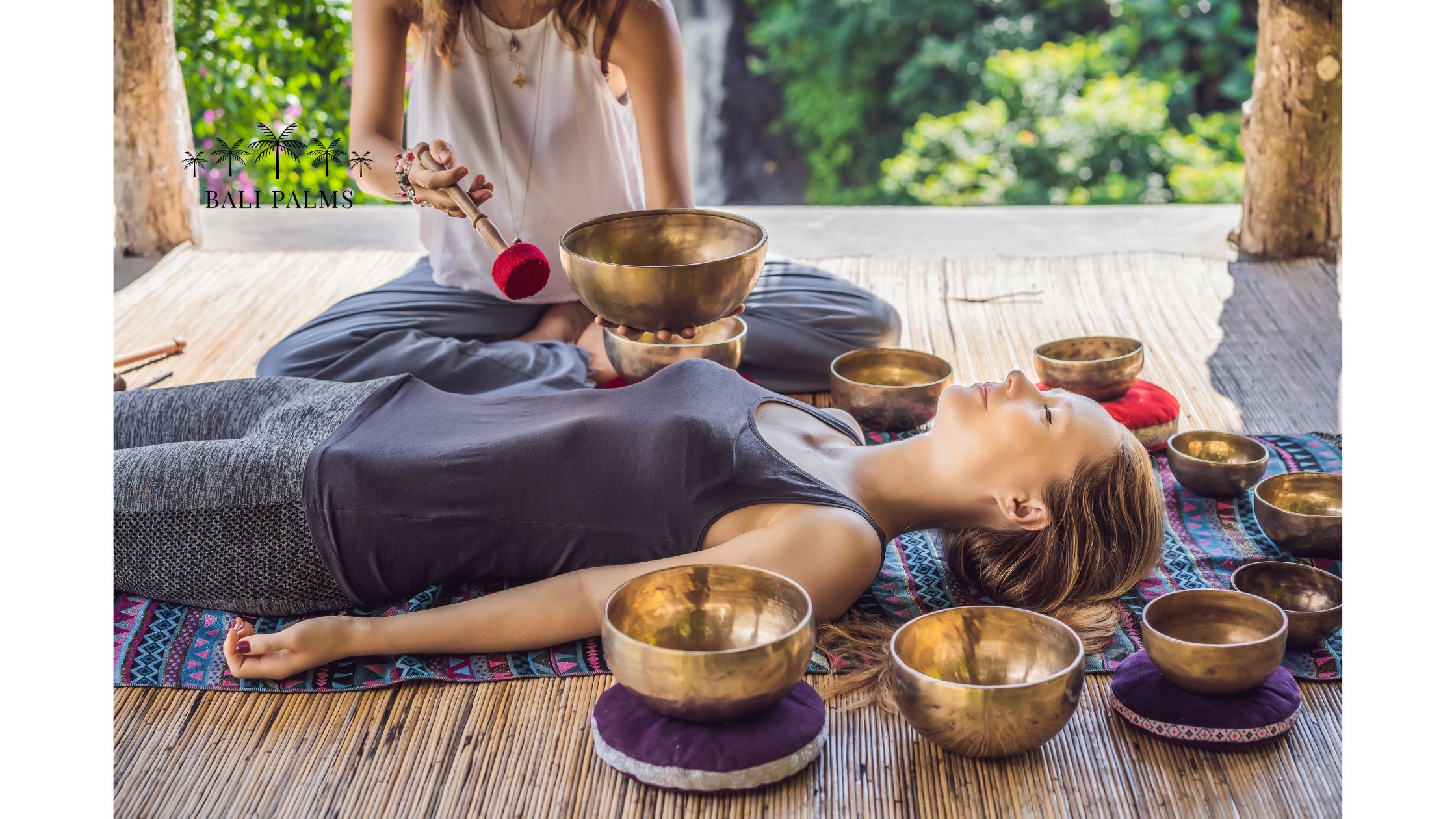
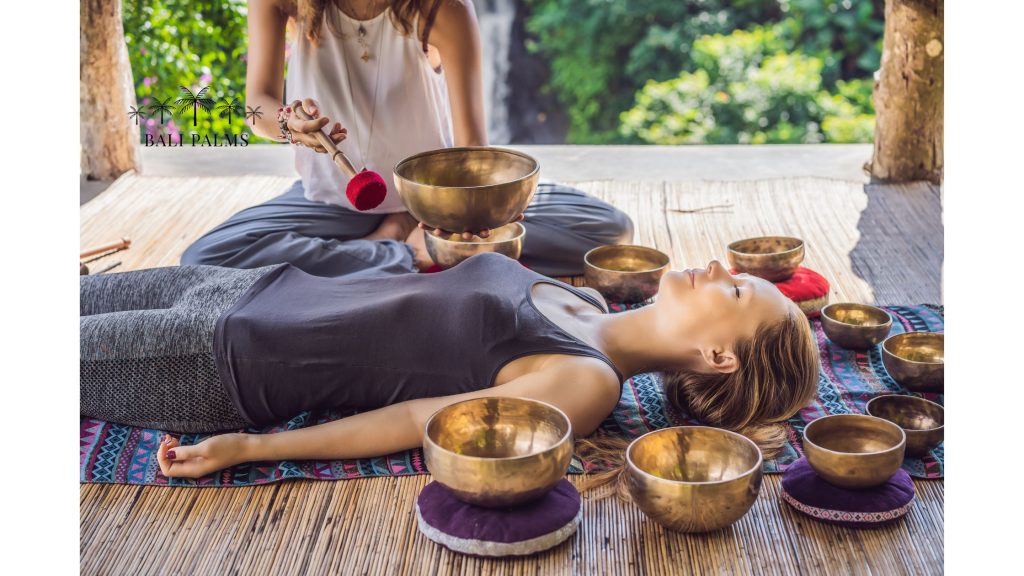
Deep, resonant tones that weren’t just heard but felt. Unlike the crystal bowls sometimes used in Western wellness spaces, these traditional instruments carried a different quality older, more grounded, connected to the earth itself.
The vibrations moved through the mat, through the body. Like being held by sound itself. This sonic journey wasn’t about music in any conventional sense. It was about frequencies that seemed to bypass the mind entirely and speak directly to the body and soul.
The Moment of Release
Time became strange. At some point, that chest the tight, painful place carried for months began to soften. Not intellectually, not through self-talk, but physically. The pressure released.
Then came tears. Not polite ones, but deep, wrenching sobs from somewhere primal. Embarrassment didn’t arrive. In that space, held by those harmonic vibrations and the darkness and the healer’s presence, falling apart was safe. The grief poured out without words, without explanation, without anyone asking for analysis or sharing or processing.
The healer moved closer. The vibrations intensified near the chest. She said something softly in Balinese, then in English: “Love still here. Just change form.”
That simple statement reframed everything. The grief wasn’t a betrayal of faith or a weakness to overcome. It was love continuing, taking a different shape. In that moment, something awakened not happiness, but the possibility of carrying this pain differently.
After the Session
When the session ended, silence held for a long time. This deep relaxation felt different from sleep or rest more like the body had finally exhaled after holding its breath for months.
Finally sitting up, the body felt different. Softer. More permeable. Small smiles got exchanged with the other participants, but no one spoke. Words weren’t needed. The feeling of connection in that space transcended language.
Approaching the healer afterward, palms pressed together at the heart as Selena had taught. “Sukma,” using one of the few learned Balinese words. Thank you.
Her hand rested briefly on a shoulder. “You good mother to your grief now,” she said. “This is sacred work.”
That night brought six hours of straight sleep. The first real rest in half a year. The body seemed to know it was finally safe to let go.
What Modern Research Reveals About Sound and Healing
The Science Behind the Experience
Years of teaching meant insisting students research their topics thoroughly. The same standard applied after this healing experience. Understanding what had actually happened mattered. Was it just emotional suggestion, or was something real at work?
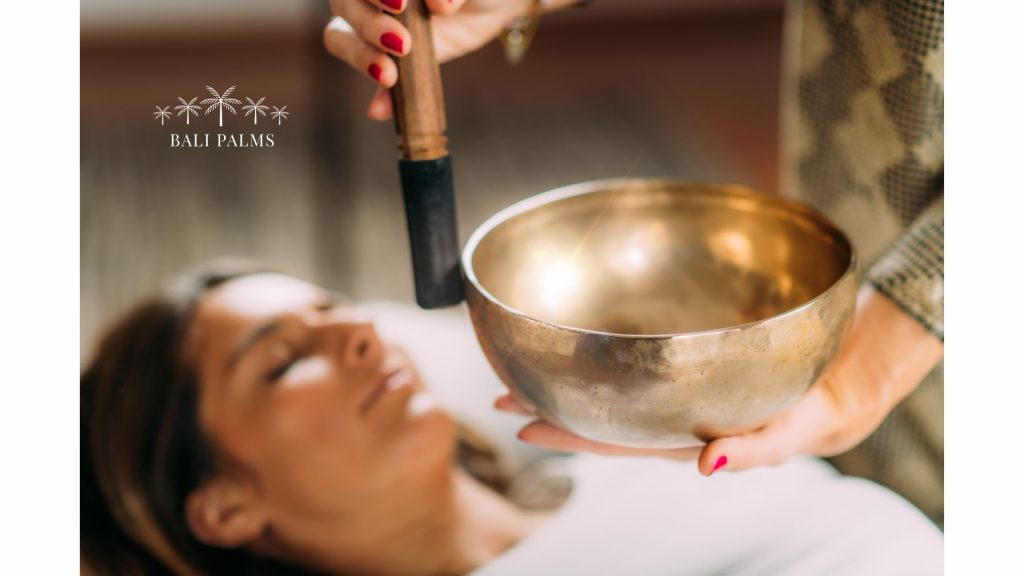
Genuine science exists behind sound healing, though it’s still an emerging field. Modern research is beginning to validate what traditional medicine has known for centuries. A 2025 systematic review in the journal Healthcare analyzed numerous studies on sound bowl interventions. Most reported significant reductions in anxiety and depressive symptoms (Lin et al., 2025).
The researchers explain that these harmonic vibrations can actually calm the nervous system, moving the body out of a stress response and into a state of rest and restoration. Some studies have even shown improvements in blood pressure and other stress markers.
The power of sound to create physiological change is increasingly documented in scientific literature.
Ancient Wisdom Meets Modern Validation
Research also revealed that in Bali, this practice isn’t some invented wellness trend. It’s rooted in centuries-old temple traditions and purification rituals called Tirta.
According to research on spiritual healing in Bali, tourists find authenticity when native practitioners lead them through native rituals it’s a genuine transmission of cultural wisdom, not a performance (Sutarya & Sirtha, 2017).
The traditional techniques used by Balinese healers have been passed down through generations. These aren’t tuning forks or tools from the Tama Do Academy or other Western sound healing schools (though those have their place). These are instruments and practices deeply connected to the island’s spiritual understanding of harmony and balance.
This mattered deeply. As a Catholic, wariness about cultural appropriation or spiritual tourism runs deep. But this healing journey wasn’t someone selling enlightenment. It was participation in a living tradition, one that honored the sacred in a respectful way.
Six Months Later: The Lasting Impact
What Has Changed
Six months have passed since that evening in Tabanan, making it a full year after Tom’s death. Life back home in Ohio continues or what passes for regular now.
Has the grief disappeared? No. Anyone promising to make grief vanish is selling something. Tom gets missed every day. Moments still arrive when the loss feels as fresh as the beginning.
But something fundamental shifted that night. Grief doesn’t have to be processed through words. The body can release pain that can’t be articulated. Mourning can be both agonizing and sacred at the same time these aren’t contradictory states.
Practical Changes
The most practical change: sleep returns now. Not perfectly, but five or six hours most nights can be counted on. The chest tightness has diminished to maybe once or twice a week, usually triggered by a specific memory.
The stress relief isn’t complete, but it’s significant. When the tightness comes now, there’s knowledge that it will pass and tools to help restore balance breathing techniques, moments of stillness, memory of those healing sounds.
A New Morning Ritual
A simple morning ritual has developed, something that never would have happened before Bali. Ten minutes get spent each morning in the living room, in the chair where Tom used to read the paper, sitting in silence. No music, no meditation apps, just quiet. Sometimes tears come. Sometimes just breathing happens.
This practice doesn’t require any special instruments or training. It’s about creating a small sacred space in daily life, a few hours each week (or minutes each day) dedicated to just being with what is. In those moments, the healer’s words return: “Love still here. Just change form.”
These moments feel alive in a way that life hadn’t felt for months after Tom died. Not joyful necessarily, but present. Connected to something larger maybe what some would call spirit, maybe what Catholics might call grace, maybe just the simple energy of being human and breathing.
Faith Deepened, Not Replaced
Mass attendance has resumed, and no sense of betrayal exists. If anything, faith feels deeper now, less about rules and more about mystery.
The experience in Bali didn’t replace Catholic beliefs it enriched them. Both traditions recognize the sacred. Both understand that healing comes in forms we don’t always expect. Both honor love that transcends death.
How to Find Authentic Sound Healing in Bali
What to Look For
For those considering a similar healing journey, discernment matters. The wellness industry in Bali has grown significantly, and not all offerings are created equal. Here’s what to look for in authentic sound healing sessions:
Trained Local Practitioners: Is the session led by a Balinese healer with deep roots in the tradition? Someone who learned these practices from family or village elders? This matters far more than someone who completed a certification program, no matter how prestigious.
Small Group Sessions: Authentic sessions are intimate usually five to ten people maximum. Large groups dilute the energy and make it impossible for the healer to attend to individual needs.
Ceremonial Elements: Does the session begin with offerings and prayer? This isn’t just aesthetic it sets intention and honors the tradition’s sacred origins.
Traditional Instruments: Look for sessions using traditional gongs, bamboo instruments, and voice rather than exclusively crystal bowls or other Western additions. While singing bowls have their place, authentic Balinese healing uses instruments connected to the island’s spiritual cosmology.
Time for Integration: After the session ends, there should be space to sit in silence, journal, or slowly return to regular awareness. Being rushed to the next activity defeats the purpose.
Reasonable Pricing: Authentic healers typically work on donation or modest fees. If the price seems inflated or resembles spa pricing, that’s a red flag.
What to Avoid
Stay away from:
- Resort wellness packages that treat sound healing like another spa service
- Sessions advertised alongside “gluten free juice cleanses” and other trendy wellness buzzwords
- Practitioners who can’t explain their training or connection to Balinese tradition
- Large group sessions in hotel conference rooms
- Anything that promises specific outcomes or “unconditional love” experiences
- Sessions focused on social media moments rather than genuine healing
Preparing for Your Session
If you decide to explore this path, here’s how to prepare:
Physical Preparation: Stay hydrated throughout the day. Eat lightly heavy meals can make lying still uncomfortable. Avoid caffeine for a few hours before the session to help the nervous system calm more easily.
Mental Preparation: Come with an open heart but realistic expectations. This isn’t magic. It won’t “fix” you. But it might create space for something to shift. Release any need to control or understand what will happen.
Cultural Respect: Wear modest clothing covering shoulders and knees. Silence your phone completely. Arrive on time. Bring a small offering if appropriate (Selena suggested flowers or fruit). Be ready to participate in whatever opening ceremony or prayer the healer includes.
Emotional Readiness: Be prepared for strong emotions to arise. That’s part of the process. The sacred space and gentle nature of the practice make it safe to feel what needs to be felt.
Who Should Consider This Healing Journey
Ideal Candidates
This healing experience isn’t for everyone, and it won’t work for everyone. Those looking for a quick fix or a guru to solve problems should stay home. This is not that.
But for someone who:
- Has tried traditional therapy or support groups and found them inadequate
- Struggles to verbalize pain or access emotions through talk therapy
- Feels grief, trauma, or stress lodged in the body, not just the mind
- Can approach another culture’s wisdom with genuine respect and humility
- Is willing to surrender the need to control or understand everything intellectually
- Wants to explore traditional techniques that modern research is beginning to validate
- Seeks inner harmony without abandoning their existing faith or belief system
…this might offer something unexpected. The healing journey isn’t about finding answers. It’s about learning to carry questions differently.
Especially Beneficial For
Bereaved Individuals: There’s something about sound healing that allows honoring the dead without having to explain them, grieving without words. For those raised in traditions that sometimes struggle with emotional expression, it can bring profound relief.
Those with Physical Stress Symptoms: When grief or trauma manifests as chest tightness, insomnia, or chronic tension, these vibrations can help the body release what talk therapy alone cannot reach.
People Raised in Traditional Faiths: For Catholics, mainline Protestants, or others from structured religious backgrounds, this practice can complement rather than contradict faith. It’s not about replacing belief systems but expanding understanding of how healing happens.
Midlife Transition Navigators: Retirement, divorce, career changes, empty nest major life transitions often bring grief that society doesn’t fully acknowledge. Sound healing offers a way to honor these losses and find new balance.
When to Be Cautious
A few situations where extra care is needed:
- Active psychosis or severe mental health crises (seek immediate professional help first)
- Recent physical trauma or surgeries (consult a doctor about whether deep vibrations are safe)
- Severe hearing sensitivity or conditions where loud sounds are problematic
- Inability to lie still for 60-90 minutes due to physical conditions
- Expectations of immediate, dramatic transformation (healing is often subtle and gradual)
Integrating the Experience Back Home
Creating Your Own Practice
The inner peace discovered in Bali doesn’t have to end when the plane lands. The real transformation happens through integration finding ways to bring that sense of calm and connection into daily life.
This doesn’t mean recreating the session. Most of us don’t have access to Balinese healers and traditional instruments in Ohio or wherever home is. But we can create small rituals that help us remember and reconnect to what awakened during the experience.
Simple Morning Silence: Even five minutes of sitting quietly each morning can become a sacred space. No apps, no music, no agenda. Just breath and presence.
Body Awareness: Throughout the day, pause to notice where tension lives. Breathe into those spaces. Remember the feeling of vibrations moving through the body and invite that same softness.
Sound Exploration: While not the same as the healing instruments used in traditional sessions, gentle music or nature sounds can support relaxation. The ocean, wind, rain the earth has its own harmonies.
Journaling: Write about the experience, but also about the ongoing journey. What moments bring peace? When does the old tightness return? What helps restore balance?
Community Connection: Whether through church, meditation groups, or simply deep conversations with trusted friends, maintain connection. Healing isn’t meant to be solitary.
When to Return
Some people find that one session is enough to catalyze lasting change. Others benefit from returning periodically perhaps annually or during particularly stressful times. There’s no right answer. Listen to your body and spirit. They’ll tell you when it’s time to seek that sacred space again.
Frequently Asked Questions
What exactly happens during a sound healing session?
During a typical session, participants lie on mats in a quiet space while a trained healer uses traditional instruments gongs, bells, bamboo instruments, and voice to create layers of healing sounds and vibrations.
The session usually lasts 60-90 minutes. Many people experience deep relaxation, emotional release, or simply a profound sense of calm. The harmonic vibrations work directly on the nervous system, bypassing the need for verbal processing.
How is this different from Western sound therapy or singing bowls?
Authentic Balinese sound healing is rooted in centuries of traditional techniques connected to temple ceremonies and spiritual cosmology. It’s not just about the instruments themselves, but about the sacred space created and the healer’s training in ancient wisdom.
Western approaches often focus more on the scientific aspects of frequencies and may use crystal bowls or tuning forks. Both have value, but the Balinese approach integrates spiritual ceremony with the healing journey in ways that feel distinctly different.
How much does an authentic session cost?
Traditional village healers in Bali typically work on donation basis or charge modest fees—usually $20-50 USD equivalent. If you’re being charged spa-like prices ($150+), that’s likely a commercialized version.
The focus should be on the healing, not profit. Always ask about costs upfront and understand that your donation supports not just the healer but often the maintenance of sacred spaces and continuation of traditional practices.
Diane M. a real guest who experienced this transformative journey with us. We’ve changed his name and some identifying details to protect his privacy, but this story authentically represents his experience at our retreat.
You might also liike: Quiet Places in Bali: A Healthcare Professional’s Guide to Authentic Rest and Cultural Connection