
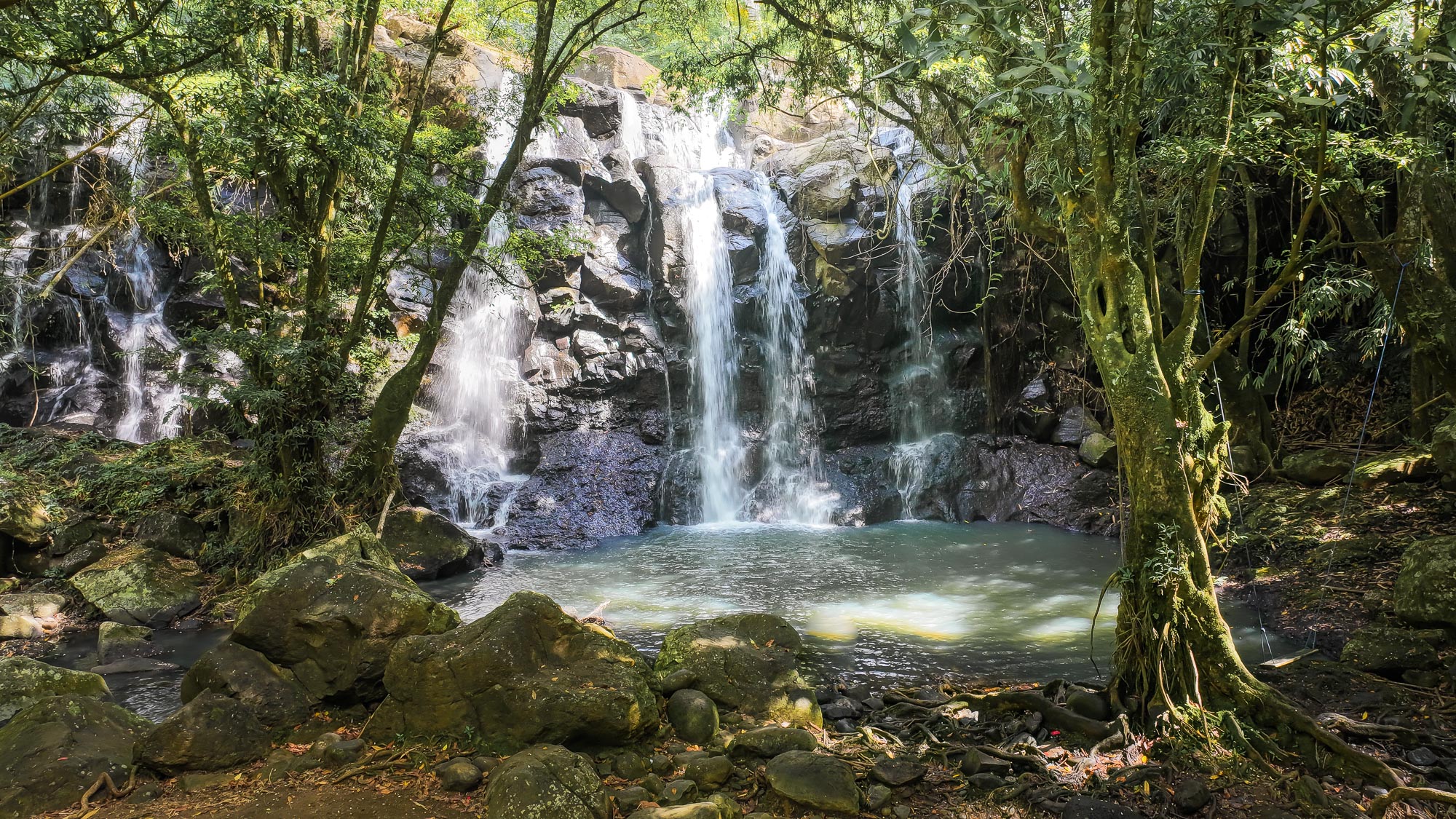
Most visitors to Bali’s waterfalls go to the same three or four. They queue. They pay an entrance fee. They take the photograph. They leave.
Tabanan’s waterfalls are different.
The Tabanan regency — inland Bali, in the foothills and highlands west of Ubud — contains some of the most beautiful waterfall scenery on the island. It also contains almost none of the crowds. The region has not been packaged for mass tourism in the way that Ubud’s surrounding villages have. The roads are narrower, the signage is sparser, and the experience of arriving at a Tabanan waterfall tends to feel like a discovery rather than an attraction.
This is what makes the area worth knowing about — and why it matters where you base yourself when you come to explore it.
The Landscape That Produces Them
Tabanan’s waterfalls exist because of the terrain. The regency is dominated in the north by Mount Batukaru — at 2,276 metres, the second-highest peak in Bali and one of the wettest. The mountain’s flanks receive consistent rainfall year-round, feeding an intricate system of rivers and streams that cascade down through dense secondary forest before reaching the valleys and rice fields below.
This means that Tabanan’s waterfalls are not seasonal. They run throughout the year, fed by the cloud forest above. In the wet season (November through March) they are at full force. In the dry season they are quieter and easier to reach on foot. Both are worth experiencing.
What to Expect on a Waterfall Visit in Tabanan
Reaching Tabanan’s waterfalls typically requires either a vehicle to the nearest access point and then a walk, or a guided trek through jungle and farmland. The walks range from gentle (fifteen to thirty minutes on a clear path) to more demanding (ninety minutes or more through secondary forest requiring a local guide).
The experience at the falls themselves is generally intimate — a small pool at the base, sound of water, jungle around you, no food vendors or souvenir stalls. Bring dry clothes, closed shoes suitable for slippery rock, and more water than you think you need.
Most visits are best arranged with a local guide, both for navigation and for context. The area around Batukaru is considered deeply sacred in Balinese Hinduism — the mountain is home to Pura Luhur Batukaru, one of Bali’s nine directional temples — and a guide who knows the area will give you a very different understanding of what you are walking through than a map alone.
Combining Waterfalls with the Batukaru Temple
Pura Luhur Batukaru sits at approximately 1,000 metres on the mountain’s southern slope, surrounded by mossy forest and usually wrapped in low cloud. It is one of the most atmospheric temples in Bali — not because it is the most architecturally elaborate, but because of the quality of the silence and the sense of active spiritual life that the site carries. The temple is still in use for regular Balinese Hindu ceremonies.
A visit to the Batukaru area can combine the temple, one of the nearby waterfalls and a walk through the surrounding forest in a half-day or full-day programme. This is one of the most rewarding day trips available from the Tabanan area — and one of the least-known outside the Indonesian travel community.
The Drive Through the Rice Terraces
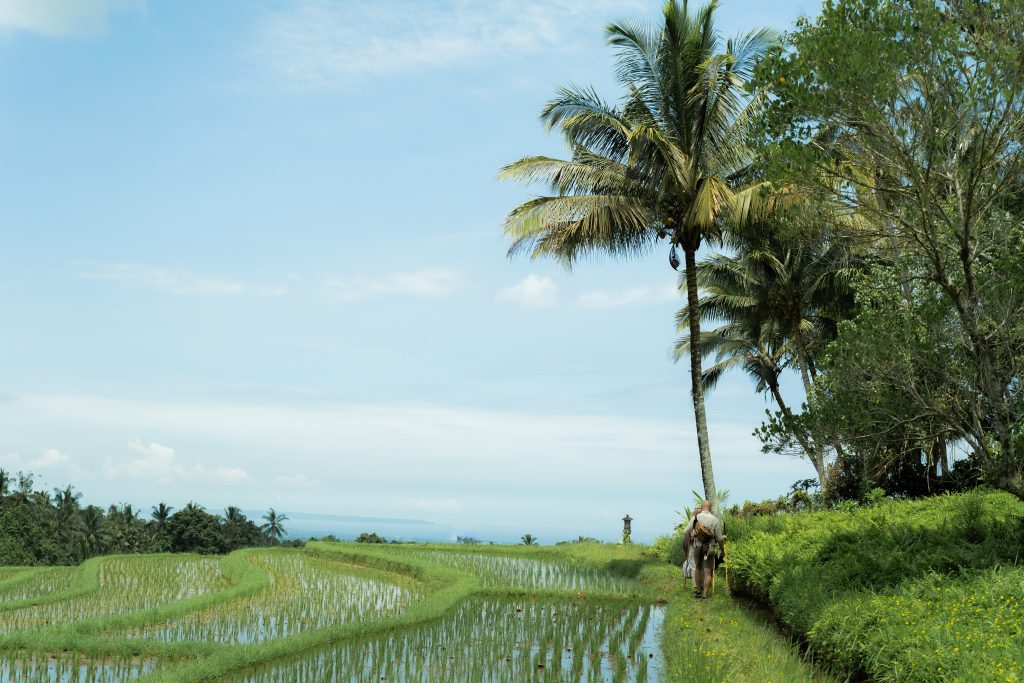
Getting to the Tabanan highlands means passing through some of the most beautiful working agricultural landscape in Bali. The Jatiluwih rice terraces — a UNESCO World Heritage Site and the largest surviving traditional rice terrace system on the island — are in Tabanan, and the road that winds through them toward the mountain is worth driving slowly.
Unlike the Tegallalang terraces near Ubud (which are heavily visited and surrounded by swings and cafes), Jatiluwih is still primarily a working agricultural site. The terraces are vast — you cannot see them in a single glance — and the villages that sit within them are ordinary Balinese farming communities going about their daily lives. There is an entrance fee for the area, but the crowds are a fraction of what you would find in the southern tourist circuit.
Using Bali Palms as Your Base
Bali Palms is located in the Tabanan foothills — the same distance from Ngurah Rai Airport as Ubud, but in entirely the opposite direction from the tourist south. The resort sits within easy reach of the main waterfall and trekking areas of the Batukaru region, as well as Jatiluwih and the Tabanan coast.
For guests staying on any Bali Palms programme, short hiking to the Tabanan highlands — including guided waterfall treks, the Batukaru temple and the Jatiluwih terraces — can be arranged through the resort. Our local team has relationships with guides who have been working in the area for years and know it at a level that no online itinerary can replicate.
If you are spending several days in the Tabanan area, the resort’s full-board all-inclusive packages mean that logistics stay simple: you leave for the trek from the resort, you return to a meal that has been prepared for you.
A Note on Timing
The best time to visit Tabanan’s waterfall areas is mid-morning — after the early mist has lifted from the jungle but before the afternoon clouds begin to build around the mountain. For serious trekking, an early start is recommended to maximise clear weather and return before afternoon rain.
If you are visiting between November and March, bring umbrellas regardless of what the morning sky looks like. Batukaru creates its own weather.
Practical Information
- Nearest major town: Tabanan town — approximately 25km south of the Batukaru area
- Distance from Bali Palms: 30–45 minutes by vehicle to the main highland trekking areas
- Best with: A local guide — essential for off-trail routes, recommended for all temple visits
- What to bring: Closed shoes, dry change of clothes, water (minimum 1.5L per person), cash for temple donation
- Available as: A half-day or full-day excursion bookable through Bali Palms