
By Maya, Automotive Manufacturing
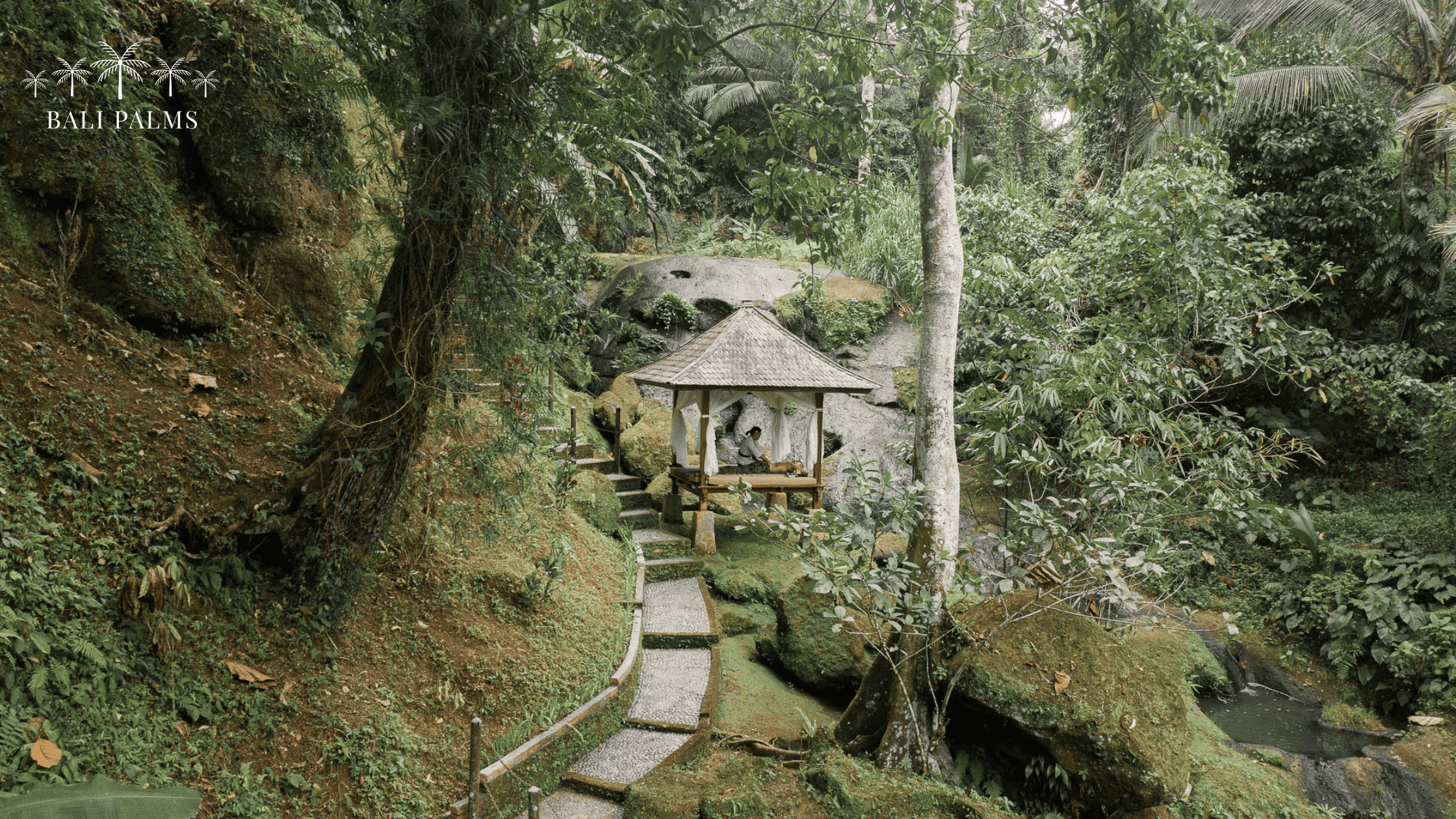
A year ago, my husband booked us a trip to Bali Palms, a hotel in the rainforest nestled in Tabanan’s lush rainforest. Honestly? I went to make him happy, not because I thought it would change anything. But sometimes the experiences we resist most are exactly what we need.
This is my story of how a practical, skeptical manufacturing manager learned that a hotel surrounded by nature could offer something far beyond relaxation it could offer transformation.
What You’ll Discover:
- Why a hotel in rainforest is more than accommodation
- The scientific evidence behind forest immersion
- How meaningful connections with local communities
- What authentic luxury resort experiences look like
The Retirement Crisis Nobody Mentions
After thirty years as an operations manager in automotive manufacturing, I retired at 62. Everyone congratulated me. “You’ve earned this! Time to relax and enjoy life!”
Nobody warned me about the hollow feeling that would settle in within weeks.
For three decades, I was the person people called when problems needed solving. Then suddenly, I wasn’t needed anymore. My husband thrived in retirement he had hobbies, friends, a whole life he’d been cultivating. I had nothing that felt meaningful.
The Failed Attempts at Finding Purpose
Golf was spectacularly boring. Home renovation projects felt empty. We tried a traditional beach resort with gourmet food and a stunning pool I was restless and irritable within two days. The relaxation everyone promises retirement will bring felt more like suffocation. Volunteering didn’t stick.
The worst part? I felt like I couldn’t complain. I had a comfortable retirement, a loving spouse, my health. Instead of grateful, I felt lost.
The Jungle Trip I Didn’t Want
When my husband discovered Bali Palms online, he was immediately intrigued. He’d been researching properties from Costa Rica to Belize, reading about places like Mashpi Lodge in Ecuador and Silky Oaks Lodge in Australia. He wanted what he called “a meaningful nature experience,” not just another vacation.
The idea of staying at a hotel in the rainforest sounded uncomfortable, humid, and designed for people half my age who do yoga and talk about “finding themselves.” I’m practical.
I like air conditioning and predictable schedules. The thought of spacious suites with ceiling windows opening to jungle sounds and howler monkeys seemed more anxiety-inducing than appealing.
But he really wanted to go, and I didn’t have a better plan, so I agreed. Expectations were low. I packed mosquito repellant, practical clothing, and considerable skepticism.
Arrival: When Nature Becomes More Than Background
After a bumpy ride in a local bemo through forested mountains, we arrived at the property. I stepped out sweaty, tired, and prepared to politely endure whatever came next.
The sheer aliveness of the place caught me off guard.
The Living Ecosystem of a True Rainforest Hotel
Unlike many hotels I’d visited that simply offered stunning views of nature as a backdrop, this sanctuary felt integrated with the surrounding rainforest.
The sounds weren’t just bird calls it was a constant, layered symphony of life. Birds moved through the canopy overhead. Everything felt vibrant and present in a way that made me realize how much of my life had been spent disconnected from the natural world.
Our guide Wayan welcomed us to our bungalow with calm warmth. No sales pitch or activities schedule. Instead: “The rainforest has been here long before hotels, long before travelers. We’re just helping you learn its language.”
From our balcony, I could see the jungle stretching endlessly. At breakfast the next morning on an open-air platform, I watched wildlife move through the trees while eating fruit picked that morning from the land around us. It was the kind of unique experience you can’t create in a traditional luxury resort, no matter how high the thread count.
The Science Behind Forest Bathing
Over the next few days, Wayan mentioned something called “shinrin-yoku” or forest bathing. Initially dismissed as New Age nonsense. But when I asked questions (old quality control habits), he pointed me toward actual research.
Why Immersion in Nature Actually Works
Solid scientific evidence shows that spending time in a forest environment reduces cortisol levels and lowers blood pressure. A study published in Environmental Health and Preventive Medicine (2010) documented these physiological effects systematically. The rich biodiversity of a lush rainforest far more complex than a city park or beach amplifies these benefits.
This appealed to my practical side. Not mystical belief measurable results.
What surprised me more was learning how Balinese communities view the surrounding rainforest: not as a resource to extract from, but as sacred space where spiritual and physical worlds intersect.
Similar reverence exists in Costa Rican rainforest communities, among villages near Bwindi Impenetrable Forest in Uganda, and in cultures throughout the planet who’ve lived sustainably alongside jungle ecosystems for generations.
The atmosphere here wasn’t about escaping the outside world it was about reconnecting with a vital, living system that modern life had trained me to forget.
The Turning Point: Finding Purpose in Craftsmanship
The real breakthrough came during a visit to a local woodworking cooperative that the lodge supports as part of its commitment to sustainability.
When Your Skills Find New Application
These Balinese craftsmen practiced an art form passed down through generations, using sustainable forestry techniques. They approached their work with the mindfulness I’d seen in the best machinists I’d supervised over thirty years.
One artisan, Made, spent an entire afternoon showing me traditional joinery techniques. We barely shared a common language, but communicated through the work itself. He valued my questions about structural integrity, treated my manufacturing experience as something useful, not obsolete.
For the first time since retirement, someone valued what I knew. Made asked detailed questions about quality control systems, trying to help his cooperative scale without losing traditional methods.
My skills weren’t worthless. They just needed a different application.
The Reforestation Project That Changed Everything
On day five, I joined a conservation initiative the sanctuary organizes with local villages. Almost skipped it hot, tired, planting trees sounded like symbolic gesture.
But I went.
Discovering That Systems Thinking Has Universal Application
We spent the morning planting native species on degraded land. The environmental coordinator, Ketut, explained the systematic approach: which species stabilize soil, support wildlife corridors, have cultural significance for communities.
Methodical. Strategic. Not unlike the process optimization I’d done for thirty years, but with completely different goals not efficiency for profit, but sustainability for future generations and protection of natural wonders.
Ketut mentioned they desperately needed help documenting and systematizing their reforestation protocols for grant applications. Said it almost offhandedly.
That night in our room, listening to the jungle’s night sounds, I couldn’t stop thinking about it. I had project management skills. Documentation expertise. Quality control knowledge. Three decades making complex operations run smoothly.
What if retirement wasn’t about stopping? What if it was about redirecting?
Beyond Tourist Experiences: Real Connections
Throughout the week, genuine conversations developed with Wayan, Made, Ketut, and others who work at the property and in surrounding communities. Not the surface-level interactions you get at typical restaurants or during standard guided tours real exchange.
When Travelers Become Collaborators
Maybe because I asked substantive questions instead of just consuming experiences. Maybe because my background meant I could engage with their operational challenges on a technical level.
Wayan discussed preserving spiritual practices while needing tourism income. Made talked about tension between traditional methods and modern market demands. Ketut shared frustration with Western conservation models that ignored indigenous knowledge.
These were complex challenges I’d navigated in different contexts my whole career. I offered observations, frameworks, systematic approaches.
And they listened. They valued what I brought to the conversation.
For someone who’d felt invisible for months, this was profound.
Redefining What Luxury Actually Means
Before this trip, luxury meant high thread counts, private pools, gourmet food prepared by celebrity chefs. That’s what the marketing for every luxury resort promises.
The Luxury of Connection Over Isolation
Bali Palms had comfortable accommodation and good dining. But that’s not what made it valuable.
Real luxury was waking to bird calls instead of an alarm. Tasting fruit picked that morning. The shocking pleasure of cool river water after a jungle hike. Access to waterfalls and natural pools that no constructed pool could replicate.
One morning nothing scheduled I walked through nearby rice terraces at dawn. Just me, the green, morning light, and farmers working land their families had cultivated for generations.
Peace. Not absence of problems, but presence of connection. Connection to the land, to meaningful work happening around me, to my own humanity beneath all the roles I’d worn.
This is something I’d heard about places like the Osa Peninsula in Costa Rica, the cloud forest regions near Mashpi Lodge, even jungle properties in Belize that the best nature-based accommodations don’t isolate you from the environment in climate-controlled suites.
They help you discover why you came: to remember what it feels like to be part of something larger than yourself.
What I’ve Built Since Returning Home
Within two months, I started a mentoring program connecting retired tradespeople and manufacturing professionals with young people entering skilled trades.
Tangible Outcomes from an Intangible Journey
Used every project management skill I’d developed over thirty years. Systematic, scalable, practical. But the purpose behind it the understanding that experience and wisdom have value beyond corporate metrics that came from my time in Bali.
Also working remotely with Ketut’s conservation group, helping document their reforestation protocols. Two hours weekly on video calls. Most meaningful work I’ve done. Successfully applied for a regional grant last month.
Meeting quarterly via video with Made’s cooperative, developing quality control systems that preserve traditional methods while meeting international standards. Exploring partnerships with sustainable furniture retailers.
None of this makes me rich. All of it makes me purposeful.
The mentoring program now serves 47 young tradespeople. Ketut’s group completed their largest reforestation project yet expanding habitat corridors in an area that could eventually connect to what locals hope might become recognized as a UNESCO World Heritage Site for its biodiversity. Made’s cooperative secured a major partnership.
Frequently Asked Questions
What’s the difference between jungle hotels in different countries like Costa Rica versus Bali versus Belize?
From what other travelers have shared and my own research, properties worldwide offer incredible nature and wildlife experiences that vary by location. In places like Costa Rica’s Osa Peninsula or cloud forests, the focus is on ecological adventure hiking, spotting wildlife like howler monkeys, and exploring national parks.
Belize properties near the Maya Mountains emphasize nature discovery. In Bali, the rainforest is deeply tied to spiritual culture, blending nature with centuries-old community traditions. Neither is better choose based on whether you seek pure adventure or cultural-spiritual integration with nature.
How do I ensure my visit actually benefits local communities rather than extracting from them?
Look for transparency about community partnerships. Authentic properties will specify how they employ local people, source from nearby suppliers, facilitate experiences led by community members themselves.
Choose lodges that support local artisans, participate in specific conservation initiatives, demonstrate reciprocity. The best sanctuaries create what I now understand as mutual enrichment—guests benefit from the experience, and communities gain sustainable economic support plus assistance with challenges they’re actually facing.
Arrive as a learner willing to share your own expertise when appropriate, not just as a consumer of experiences. The most meaningful exchanges happen when travelers bring something to the conversation questions, perspectives, skills that communities find genuinely valuable.
I’m worried about feeling uncomfortable or too isolated. What should I expect?
Most quality jungle properties balance access to nature with comfortable accommodation. You’ll have a proper room or bungalow, real beds, functioning bathrooms not roughing it. But you’ll also have ceiling windows or balconies that open to the surrounding rainforest, bringing the outside world in rather than shutting it out.
Yes, you’ll hear wildlife at night. Yes, it’s humid. Yes, you might see monkeys or exotic birds from your breakfast table. These “discomforts” become part of the journey rather than obstacles to it.
As for isolation: properties nestled in nature often foster more genuine connection than crowded beach resorts. You connect with the land through guided hikes to waterfalls or simply listening from your balcony. You connect with culture through workshops and conversations. You connect with yourself through the peace and quiet.
Many guests myself included who arrive fearing solitude leave with a profound sense of belonging they haven’t felt in years. The isolation you fear often transforms into the connection you need.
Maya is a real guest who experienced this transformative journey with us. We’ve changed her name and some identifying details to protect her privacy, but this story authentically represents her experience at our retreat.